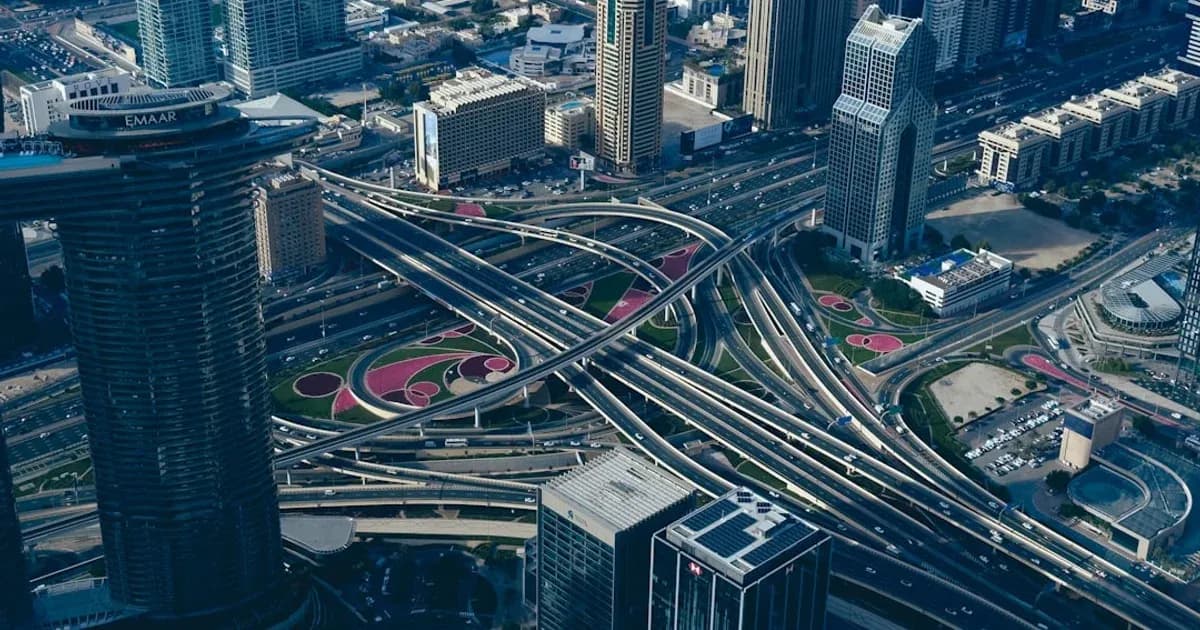
Urban congestion is not merely an inconvenience. It is a measurable economic drain. The Boston Consulting Group estimated that traffic congestion costs Indian cities approximately $22 billion annually in lost productivity, wasted fuel, and increased logistics costs. Delhi, Mumbai, Bengaluru, and Kolkata consistently rank among the world's most congested cities, with average commuters spending 1.5 to 2 hours daily in traffic. The problem is growing: India's urban vehicle population is projected to triple by 2035, while road capacity expansion cannot keep pace.
Traditional traffic management operates on fixed timing plans. Traffic signals cycle through predetermined green phases — 30 seconds for the main road, 20 seconds for the cross street — regardless of actual traffic conditions. These timing plans are set based on historical traffic surveys, updated infrequently (often years between updates), and cannot respond to real-time demand variations. The result is systematic inefficiency: green time allocated to empty approaches while vehicles queue on congested ones, timing plans optimized for average conditions that match actual conditions for only a fraction of the day.
AI-powered traffic optimization replaces this static approach with adaptive intelligence. Cameras, radar sensors, and inductive loops feed real-time traffic data to AI models that continuously adjust signal timing based on actual vehicle counts, queue lengths, and traffic flow patterns across connected intersections. The shift is from managing individual intersections in isolation to optimizing traffic flow across corridor networks and entire urban zones.
Adaptive Signal Control: How It Works
Adaptive signal control technology (ASCT) uses real-time traffic detection to adjust signal timing parameters — cycle length, phase splits, and phase sequencing — in response to current traffic conditions. Unlike fixed timing plans that remain static for months or years, adaptive systems recalculate optimal timing every cycle (typically 60-120 seconds), responding to demand fluctuations throughout the day.
The detection infrastructure consists of cameras with computer vision processing, radar sensors, or a combination of both. AI Video Intelligence systems deployed at intersections perform vehicle detection, classification, counting, and queue length estimation in real time. Computer vision offers advantages over traditional inductive loop detectors: it provides richer data (vehicle type, speed, lane occupancy, pedestrian presence), covers multiple lanes and approaches from a single camera, and does not require cutting into pavement for installation.
The optimization layer receives detection data from all intersections in a coordinated zone and solves for signal timings that minimize total delay across the network. This is a constrained optimization problem: minimize vehicle delay and stops while respecting minimum green times for pedestrian safety, maximum cycle lengths for driver patience, and coordination offsets that create "green waves" along arterial corridors. Machine learning models trained on historical traffic patterns improve their predictions of short-term demand, allowing the system to anticipate rather than merely react to traffic changes.
Real-world deployments of adaptive signal control consistently demonstrate measurable results. Pittsburgh's Surtrac system reported 25% reduction in travel time, 40% reduction in vehicle wait time, and 21% reduction in emissions along equipped corridors. Sydney's SCATS system, deployed across thousands of intersections globally, reports typical delay reductions of 15-25%. The key performance variable is the density of instrumented intersections — isolated adaptive intersections deliver marginal improvement, while fully connected corridors achieve substantial flow optimization.
Computer Vision for Traffic Intelligence
The role of computer vision in traffic management extends beyond signal control. AI-powered cameras serve as comprehensive traffic sensing platforms that generate data for multiple applications simultaneously.
Traffic counting and classification provides the foundational data layer. Cameras equipped with deep learning models identify and count vehicles by type — passenger cars, buses, trucks, auto-rickshaws, two-wheelers, and bicycles — across all lanes and approaches. This classification is essential in Indian traffic environments where mixed traffic (motorized and non-motorized vehicles sharing lanes without lane discipline) makes traditional loop-based detection unreliable. The models must be trained on Indian traffic conditions specifically, as vehicle types, driving behaviors, and traffic patterns differ substantially from the Western contexts where most commercial traffic AI systems were originally developed.
Incident detection identifies stopped vehicles, wrong-way drivers, debris on roadway, and other non-recurring events that cause congestion. By detecting incidents within seconds rather than relying on phone calls from motorists (which may take 10-15 minutes), response times decrease dramatically. Since non-recurring incidents cause an estimated 25% of urban congestion, faster detection and response have significant system-wide benefits.
Queue length and density estimation allows traffic management centers to visualize congestion patterns across the network in real time. This spatial awareness enables proactive interventions — rerouting traffic via variable message signs, adjusting signal timing in adjacent corridors, or dispatching traffic police to critical intersections — before congestion propagates through the network.
India's Smart Cities Mission Context
India's Smart Cities Mission, launched in 2015 with 100 selected cities, identified intelligent traffic management as a priority infrastructure investment. The mission's Integrated Command and Control Centers (ICCCs), operational in over 70 cities, provide the physical and digital infrastructure for centralized traffic management. However, many ICCCs currently operate as monitoring centers rather than optimization systems — displaying traffic camera feeds for human operators without AI-driven analytics or automated signal control.
The opportunity is to upgrade these existing ICCCs from passive monitoring to active optimization. The infrastructure investment has been made: cameras are deployed, communication networks connect intersections to the command center, and operator workstations are in place. The missing layer is the intelligence — the AI models that transform raw camera feeds into actionable traffic management decisions.
Several Indian cities have begun this transition. Bengaluru's Adaptive Traffic Control System covers major corridors with measurable congestion reduction. Pune's intelligent traffic management system integrates signal control with public transit priority. Ahmedabad has deployed AI-based traffic counting and violation detection. These implementations provide both proof points and lessons learned for other Smart Cities Mission cities planning their traffic intelligence deployments.
An Urban Intelligence System that integrates traffic optimization with broader urban management — public transit coordination, emergency vehicle preemption, event traffic management, and air quality monitoring — delivers value that exceeds the sum of individual applications. Traffic signal priority for buses improves public transit reliability, which increases ridership, which reduces private vehicle demand, which decreases congestion. This systemic perspective distinguishes genuine smart city intelligence from isolated technology deployments.
Integration with Public Transit
Traffic signal optimization and public transit operations are deeply interdependent, yet most cities manage them as separate systems. AI-driven integration creates value for both.
Transit signal priority (TSP) adjusts signal timing to reduce delays for buses and trams at signalized intersections. When the traffic system knows that a bus is approaching an intersection (via GPS, dedicated short-range communication, or camera-based detection), it can extend the current green phase or truncate the conflicting red phase to allow the bus to pass without stopping. The effectiveness depends on the bus being identified early enough to adjust the timing without excessively penalizing cross-street traffic — a balance that AI optimization handles better than simple priority rules.
The data generated by traffic AI systems also informs transit planning. Origin-destination analysis derived from anonymized vehicle tracking data reveals travel demand patterns that inform bus route design. Speed and reliability data along bus corridors identifies the locations where transit signal priority or dedicated bus lanes would have the greatest impact. Passenger demand estimation — combining transit ridership data with traffic volume data — supports frequency and capacity planning.
For Indian cities where public transit mode share is declining despite growing investment in metro rail and bus rapid transit systems, the integration of traffic AI with transit operations represents a practical pathway to improving transit competitiveness. A bus that arrives reliably within a few minutes of its scheduled time attracts riders. A bus stuck in the same congestion as private vehicles does not.
Measuring Impact: Metrics That Matter
Traffic optimization programs should be evaluated against specific, measurable metrics rather than general claims of improvement. The primary metrics include:
Average travel time along instrumented corridors, measured by probe vehicles or anonymized GPS data. This is the metric most directly experienced by road users and most clearly attributable to signal optimization. Target improvement ranges of 15-25% are realistic for adaptive signal control deployments in congested corridors.
Total intersection delay, measured in vehicle-hours per day across the equipped network. This aggregate metric captures the system-wide efficiency gain and translates directly to economic value through standard value-of-time calculations.
Number of vehicle stops, which affects fuel consumption, emissions, and driver experience. Coordinated green waves along arterial corridors can reduce stops by 30-40% compared to uncoordinated fixed-timing operations.
Emissions reduction, calculated from the combination of reduced delay, fewer stops, and improved average speed. The relationship between traffic flow quality and vehicle emissions is well-established — vehicles in stop-and-go congestion produce 2-3 times the emissions per kilometer compared to vehicles in free-flow conditions.
Public transit reliability, measured as on-time performance for bus routes along equipped corridors. Transit signal priority improvements should demonstrate measurable reduction in bus travel time variability, which is the metric that most directly influences rider experience and ridership.
These metrics should be collected continuously and reported against pre-deployment baselines to provide ongoing validation that the system is delivering its designed value. AI traffic systems that are deployed without rigorous performance measurement cannot demonstrate their contribution to urban mobility goals and cannot justify the continued investment in infrastructure maintenance and technology updates that they require.
Sources
Priya Sharma
Director of Applied Intelligence
Leads applied intelligence programs that bridge AI research and enterprise deployment at scale.