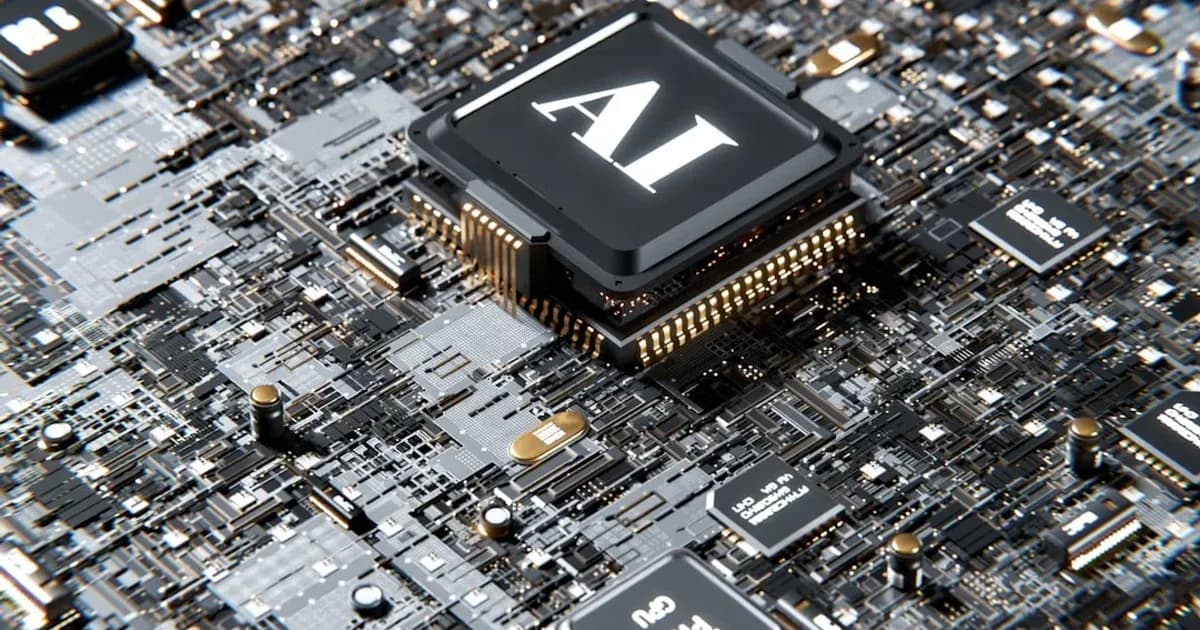
The New Foundation for Enterprise AI: Rack-Scale Integration
**Observation** The enterprise AI infrastructure landscape is undergoing a significant transformation. Recent advancements by major silicon vendors and cloud providers point towards a consolidation of compute, memory, and networking resources into integrated, rack-scale systems. No longer are organizations assembling discrete GPUs and CPUs onto individual motherboards; instead, they are procuring pre-engineered, workload-optimized racks. For instance, Intel's Project Amber and similar initiatives demonstrate a clear industry pivot towards confidential computing as a standard, not an exception, embedded directly within these new architectures. This architectural shift addresses the escalating demands for performance, efficiency, and—critically—data privacy in large-scale AI operations.
**Analysis** This fundamental change exists due to the inherent limitations of conventional server architectures when confronted with modern AI workloads. Traditional component-centric designs introduce bottlenecks. Data movement between CPU, GPU, and memory across PCIe buses creates latency. It consumes excessive power. Scaling these systems demands complex integration efforts, often leading to underutilized resources and increased operational overhead. A 2024 study by Gartner indicated that infrastructure complexity remains a top three concern for CIOs deploying AI at scale.
Rack-scale systems disaggregate these resources while keeping them logically unified. They employ high-speed interconnects like CXL (Compute Express Link) and emerging InfiniBand to create a fabric where CPUs can access vast pools of memory, and accelerators can share data directly, bypassing traditional bus limitations. This approach means memory capacity can scale independently of CPU sockets. It allows for dynamic resource allocation. Such designs drastically reduce data movement latency and increase overall system throughput. These systems provide higher compute density within a smaller footprint, consuming less power per teraflop. This is not just an incremental improvement. It is a re-architecture of the datacenter.
Parallel to this hardware evolution is the ascendance of confidential computing. As AI models ingest and process sensitive data—from customer records to proprietary industrial designs—the need for data privacy during computation becomes paramount. Confidential computing ensures data remains encrypted even while in use. It use hardware-backed Trusted Execution Environments (TEEs) such as Intel SGX, AMD SEV, or ARM CCA. These enclaves create isolated, encrypted memory regions where code executes and data processes, shielded from the operating system, hypervisor, and even privileged administrators. A 2025 report from the Confidential Computing Consortium highlighted a 3.7x increase in enterprise adoption of TEEs for AI workloads over the previous year, demonstrating this technology's growing relevance. This layer of security directly addresses concerns around data breaches, regulatory compliance, and intellectual property theft. It transforms the security perimeter from network boundaries to individual data items.
**Implication** For organizations operating in the AI space, these shifts carry profound implications. The traditional IT procurement model, focused on individual server units, becomes obsolete. Organizations must now consider integrated rack solutions, evaluating them based on workload performance, total cost of ownership, and native security features. This demands a deeper collaboration between infrastructure teams, data scientists, and security architects. The MLOps pipeline itself needs re-evaluation. Deploying models into confidential environments requires new containerization strategies and attestation procedures. It complicates debugging.
And, the integration of confidential computing alters data governance and compliance strategies. Enterprises can now process highly sensitive data in multi-party scenarios without revealing the raw data to any single entity. This capability enable new collaborative AI initiatives in regulated sectors like healthcare and finance. For instance, training a federated learning model across multiple hospitals using patient data can occur within TEEs, preserving individual patient privacy while deriving collective insights. This moves data security from a perimeter defense to an intrinsic property of the computation itself. It mandates a shift in security policy.
The move to rack-scale systems with integrated confidential compute also impacts hybrid and multi-cloud strategies. Organizations can deploy consistent, secure AI workloads across on-premises infrastructure and multiple public cloud providers. They can maintain the same level of data protection wherever the computation occurs. This reduces vendor lock-in. It provides greater flexibility in resource allocation. But it also requires careful planning for workload portability and consistent policy enforcement across disparate environments.
Redefining AI Deployment: From Components to Integrated Systems
The shift to rack-scale systems represents a fundamental re-architecture of the data center for AI. Instead of assembling individual servers with discrete components, organizations will increasingly procure pre-validated, pre-integrated systems. These systems optimize for specific AI workloads, offering higher density and better performance per watt. They accomplish this through custom interconnects and shared memory pools enabled by technologies like CXL 3.0. This allows GPUs and specialized AI accelerators to share large memory spaces efficiently. It reduces the need to constantly move data between disparate memory domains.
For example, a traditional server might have 8 GPUs, each with its own memory, connected via PCIe. A rack-scale system might feature a pool of 64 GPUs and terabytes of shared memory accessible by all processing units through a high-bandwidth fabric. This architectural choice dramatically accelerates training times for large language models or complex simulation tasks. It also lowers the cost of scaling by improving resource utilization. This is especially relevant for solutions like Shreeng AI's industry-ai offerings, which require high-throughput processing for tasks such as quality-inspection in manufacturing lines. Such inspections often involve processing gigabytes of visual data per minute, demanding infrastructure that can keep pace without introducing latency.
The Imperative of Confidentiality in AI Workloads
Confidential computing is not merely an add-on feature. It is becoming an essential component of enterprise AI infrastructure. The increasing volume of sensitive data processed by AI models, coupled with stringent privacy regulations (e. G., GDPR, CCPA, India's Digital Personal Data Protection (DPDP) Bill 2023), makes data protection during computation non-negotiable. Traditional security measures protect data at rest and in transit. They leave a vulnerability gap for data in use—when it is decrypted in memory for processing. Confidential computing closes this gap.
Using hardware-backed TEEs, organizations can create environments where even a malicious administrator or hypervisor cannot access the data or the model's intermediate states. This has transformative implications for multi-party computation and collaborative AI. Imagine multiple financial institutions wanting to train a fraud detection model using their collective, private transaction data. Without confidential computing, sharing this data would be impossible due to regulatory and competitive constraints. With TEEs, each institution can contribute encrypted data to a shared model training process, with the data remaining encrypted throughout the computation. Only the aggregated, anonymized insights are revealed.
Challenges and the Path Forward
Adopting these new paradigms is not without its challenges. The migration from existing infrastructure to rack-scale systems requires significant capital investment and re-skilling of IT personnel. Integrating confidential computing into existing MLOps workflows can introduce performance overheads and complexity in application development. Debugging within TEEs is also more intricate due to their isolated nature.
Organizations must carefully evaluate their specific AI workload requirements, security posture, and compliance mandates. They must partner with infrastructure providers who possess the expertise in deploying and managing these complex systems. This means moving beyond commodity hardware vendors towards specialists who can deliver integrated, secure AI platforms.
Shreeng AI's Position: Architecting Secure, Scalable AI for the Future
**Position** Shreeng AI recognizes that the future of enterprise AI hinges on secure, scalable, and efficient infrastructure. We view rack-scale systems and confidential computing not as optional enhancements but as foundational requirements for deploying production-grade AI. The conventional wisdom of "build it yourself" for AI infrastructure is increasingly unsustainable. The complexity demands specialized expertise.
Our approach integrates these architectural principles directly into our smart-governance-ai solutions and industrial applications. For government entities handling citizen data or for manufacturers processing proprietary designs, data privacy and integrity are paramount. We design our AI systems to operate within these secure enclaves, ensuring that sensitive information remains protected throughout its lifecycle. This enables organizations to meet stringent regulatory requirements. It allows them to derive maximum value from their data without compromising trust.
Shreeng AI advocates for a strategic shift towards purpose-built AI infrastructure that incorporates these advancements from the ground up. Our platforms, such as the predictive-maintenance system, rely on distributed, high-performance compute. Integrating confidential computing ensures that proprietary operational data, critical for anomaly detection and forecasting, remains encrypted during analysis. We believe this architectural foresight provides a competitive advantage. It secures the intellectual property inherent in AI models and the data they consume. This is the only path for enterprises to achieve true AI at scale, with both performance and uncompromised security. Organizations must plan for this future today.
Sources
- Intel's Project Amber: https://www.intel.com/content/www/us/en/developer/tools/trust-domain-extensions/overview.html
- Gartner Report on Cloud-Native Platforms: https://www.gartner.com/en/articles/gartner-predicts-by-2025-50-percent-of-enterprise-workloads-will-be-on-cloud-native-platforms
- Confidential Computing Consortium Resources: https://confidentialcomputing.io/resources/
- India's Digital Personal Data Protection (DPDP) Bill 2023: https://legislative.gov.in/sites/default/files/The%20Digital%20Personal%20Data%20Protection%20Act%2C%202023.pdf
Ananya Desai
Senior Research Scientist
Researches decision intelligence, causal reasoning, and predictive modeling for enterprise applications.