Observation
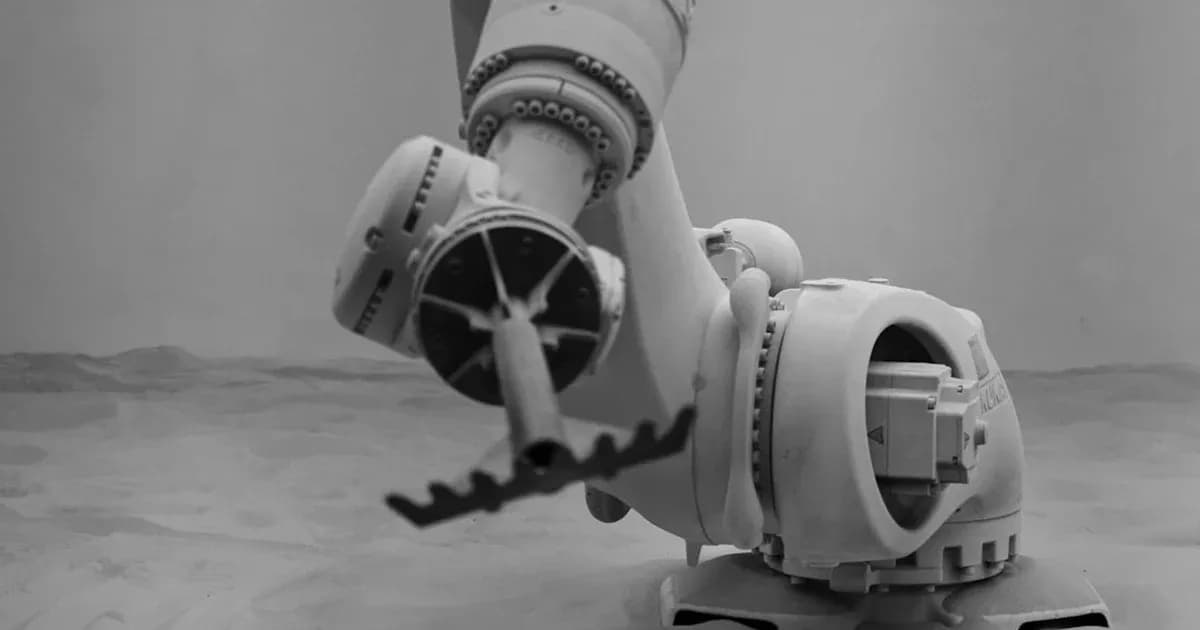
Global industrial robot installations reached a new peak, with 553,052 units shipped in 2022, marking a 5% increase over the previous year, according to the International Federation of Robotics (IFR) World Robotics Report. This figure underscores a clear industry imperative: automate. Yet, the path from concept to full operational deployment for AI-driven physical robotics remains complex. The gap between theoretical performance in simulated environments and reliable operation on a factory floor often delays projects or increases costs. This chasm is not merely a calibration issue; it represents fundamental challenges in physics modeling, sensor fidelity, and environmental unpredictability that current methodologies struggle to fully address.
Analysis: The Simulation-to-Real Chasm
Moving an AI model from a digital simulation to a physical robot involves overcoming several inherent discrepancies. Simulation offers a controlled, repeatable environment for training reinforcement learning agents or testing vision algorithms. But the real world introduces noise, material variations, unexpected occlusions, and subtle physics that are computationally expensive, if not impossible, to perfectly replicate. This is the 'sim-to-real' gap.
Physics Engines and Domain Randomization
Accurate physics engines form the bedrock of useful simulation. Environments like NVIDIA's Isaac Sim, built on the Omniverse platform, aim for high fidelity by modeling contact dynamics, friction, and gravity with precision. Yet, even the most detailed models contain approximations. To mitigate this, a technique called *domain randomization* is employed. This involves varying non-essential parameters within the simulation—textures, lighting, object positions, robot arm lengths, even sensor noise characteristics—across numerous training episodes. The goal is to expose the AI agent to a sufficiently diverse set of conditions that it learns to generalize, rather than memorize, the simulated environment. For example, a robot trained to pick up a specific component might see that component rendered with hundreds of different colors, surface finishes, and under varying illumination. This makes the model more resilient to real-world variations.
Generating diverse, high-quality synthetic data through these randomized simulations has become critical. It bypasses the prohibitive cost and time of collecting and labeling real-world data, especially for rare events or hazardous scenarios. A 2023 study by researchers at Google DeepMind demonstrated how synthetic environments could accelerate training for complex manipulation tasks, reducing the need for extensive physical trials. This approach allows engineers to iterate on robot behaviors and AI policies at speeds impossible in the physical domain.
High-Fidelity Digital Twins
A digital twin extends beyond a static simulation model; it is a live, virtual representation of a physical asset or system. For industrial robotics, this means a continuously updated digital counterpart of a robot or an entire production line. Sensors on the physical robot feed real-time operational data—joint angles, motor torques, temperatures, gripper forces—back to its digital twin. This twin can then be used for real-time monitoring, anomaly detection, and even predictive modeling. For instance, if a robot's motor temperature deviates from its predicted baseline in the digital twin, it might signal an impending mechanical failure. This capability is central to Shreeng AI's approach to industrial automation, where platforms like our `/products/predictive-maintenance` utilize such data streams to forecast component degradation.
Digital twins also provide a feedback loop for control. An AI controller can be developed and validated against the twin, then deployed to the physical robot. Any deviations observed in the physical system can be re-simulated in the twin, allowing for continuous refinement of the control policies. This closed-loop system reduces the need for constant human intervention and enables the robot to adapt to minor environmental shifts.
Collaborative Robotics and Human-Robot Interaction
The rise of collaborative robots, or cobots, introduces another layer of complexity: safe, intuitive human-robot interaction. These robots are designed to work alongside humans without safety cages. This demands precise perception capabilities, often relying on computer vision and force-torque sensors, to detect human presence and predict movements. The AI must understand context, distinguish between a human worker and a static object, and react appropriately—slowing down, stopping, or re-planning its path. The training for such nuanced interactions often begins in simulation, where various human-robot proximity scenarios can be tested without risk. This includes simulating unexpected human entry into the robot's workspace, requiring the AI to learn immediate, safe responses.
Analysis: Technical Pillars for Production Readiness
Transitioning from simulation to industrial deployment requires a resilient technical stack that addresses perception, decision-making, and operational management.
Edge AI for On-Robot Intelligence
Many industrial robotic tasks, such as quality inspection or precise manipulation, demand millisecond-level latency for AI inference. Cloud-based AI is often too slow. This necessitates *Edge AI*, where AI models run directly on the robot's embedded compute unit or on a nearby industrial PC. Optimizing these models for resource-constrained edge hardware is critical. Frameworks like ONNX (Open Neural Network Exchange) allow for model interoperability, while tools like NVIDIA's TensorRT perform compiler-level optimizations, quantizing models to lower precision (e. G., INT8) and fusing layers to maximize throughput on specific accelerators. This ensures that a robot performing real-time `quality-inspection` can process camera feeds and make decisions instantly, detecting defects as small as a hairline crack on a surface with high accuracy.
MLOps for Physical Systems
Deploying and maintaining AI in physical systems demands a specialized MLOps pipeline. This extends beyond traditional software DevOps. It includes:
1. **Model Versioning and Data Lineage**: Tracking which AI model version is deployed on which robot, trained on what data, is essential for reproducibility and debugging. 2. **Continuous Integration/Continuous Deployment (CI/CD)**: Automating the build, test, and deployment of both robot firmware and AI model updates. This minimizes downtime and ensures consistency across a fleet. 3. **Fleet Management and Monitoring**: Remotely monitoring the performance of deployed robots and their AI models, identifying drifts in performance, and triggering retraining or updates. This proactive approach prevents costly failures and maintains operational efficiency. Shreeng AI's `industry-ai` solution provides the orchestration layer for such complex, distributed AI systems, ensuring that updates and deployments are managed centrally and securely across diverse industrial environments.
Perception Systems for Industrial Precision
Computer vision systems are the 'eyes' of industrial robots. They perform tasks such as object recognition, precise pick-and-place, part alignment, and defect detection. For example, a robot might use instance segmentation to identify individual components in a bin, then use 6D pose estimation to determine their exact orientation for grasping. This requires models trained on vast datasets, often augmented with synthetic data. Shreeng AI's `/products/quality-inspection` use mature computer vision to automate defect identification, surpassing human consistency and speed. These systems often integrate with existing industrial cameras and PLCs, processing high-resolution images at line speeds.
Causal Reasoning and Decision Intelligence
Beyond reactive control, the next frontier for industrial AI is *causal reasoning*. This moves beyond mere correlation, where an AI might notice that 'A' often happens before 'B'. Instead, it seeks to understand *why* 'A' causes 'B'. For a robotic system, this means understanding the underlying mechanisms of its environment and its own actions. If a robot drops a part, a causal AI would not just know it dropped the part, but infer *why*—perhaps due to insufficient gripper force, an unexpected material property, or a sudden vibration. This enables the robot to learn from failures and adapt its policies more intelligently. Shreeng AI's `decision-intelligence` framework supports this by providing evidence-based decision support, helping systems move from data interpretation to actionable insights with a focus on causal relationships rather than superficial correlations.
Implication: Transforming Industrial Operations
The successful transition of AI and robotics from simulation to real-world deployment holds transformative implications for industrial organizations.
Accelerated Time-to-Market and Reduced Risk
Simulating complex robotic workcells allows engineers to design, program, and validate robot paths and AI behaviors entirely in the virtual domain. This significantly reduces the need for expensive physical prototypes and prolonged testing cycles on the factory floor. What once took months of physical experimentation can now be refined in weeks. Organizations minimize the risk of costly errors during physical deployment, knowing that the AI has been thoroughly vetted across thousands of simulated scenarios. A 2024 report by McKinsey & Company highlighted that companies adopting digital twin strategies for manufacturing saw a 10-15% reduction in time-to-market for new products.
Enhanced Flexibility and Customization
Digital twins and simulation platforms enable rapid reconfiguration of production lines. When product designs change, or new variants are introduced, the robotic workcell can be updated and re-validated virtually, then deployed to the physical robots with minimal shift. This flexibility is crucial in markets demanding high customization and shorter product lifecycles. It also allows for 'what-if' scenario planning, optimizing line layouts or robot assignments for maximum throughput before any physical changes are made.
Proactive Maintenance and Uptime
The continuous data streams from physical robots to their digital twins provide an rare level of insight into equipment health. Predictive analytics, as offered by Shreeng AI's `/products/predictive-maintenance` platform, can detect subtle changes in operational parameters that signal impending component failures. This shifts maintenance from reactive repairs to proactive interventions, scheduling servicing during planned downtime rather than suffering unexpected line stoppages. Such capabilities extend equipment lifespan and drastically improve overall equipment effectiveness (OEE).
Improved Human-Robot Collaboration
With AI-driven perception and safety protocols validated in simulation, cobots can become more integrated into human workflows. This boosts productivity by allowing humans to focus on tasks requiring cognitive dexterity, while robots handle repetitive or physically demanding work. The improved safety and predictability of cobots also contributes to better worker acceptance and morale, creating more efficient and safer workplaces.
Position: Shreeng AI's Stance on Verifiable AI in Industry
Shreeng AI maintains that the true value of industrial AI and robotics lies not in theoretical capabilities, but in verifiable, production-ready deployments that deliver measurable operational improvements. We do not advocate for unproven theoretical models; our focus is on systems that perform reliably under real-world industrial conditions.
The path from simulation to successful industrial deployment demands an integrated approach. It requires high-fidelity simulation environments that bridge the sim-to-real gap, resilient Edge AI for low-latency decision-making, and comprehensive MLOps pipelines for continuous management. Shreeng AI's `industry-ai` solutions are engineered to provide this full-stack capability. We offer the framework for orchestrating AI across diverse industrial operations, from intelligent `quality-inspection` systems to autonomous process automation.
Our `automation-ai` offerings are built on the principle of verifiable results. We understand that deploying AI in a factory means ensuring uptime, safety, and consistent output. It is about creating intelligent, adaptive systems that evolve with operational demands, moving beyond static programming to dynamic, learning machines. The future of industrial automation will be defined by the clarity and certainty with which AI models perform in the physical world, delivering consistent value and accelerating industrial progress.
Sources
- International Federation of Robotics (IFR) World Robotics Report: https://ifr.org/ifr-press-releases/news/world-robotics-report-2023-all-time-high-for-robot-installations
- Google DeepMind Research Blog: https://deepmind.google/discover/blog/alphadev-an-ai-programmer-outperforming-state-of-the-art-baselines/
- McKinsey & Company: The Next Frontier of Automation and AI: https://www.mckinsey.com/capabilities/operations/our-insights/the-next-frontier-of-automation-and-ai
Kavita Iyer
Lead Data Scientist
Develops predictive models and statistical frameworks for demand forecasting, risk scoring, and anomaly detection.