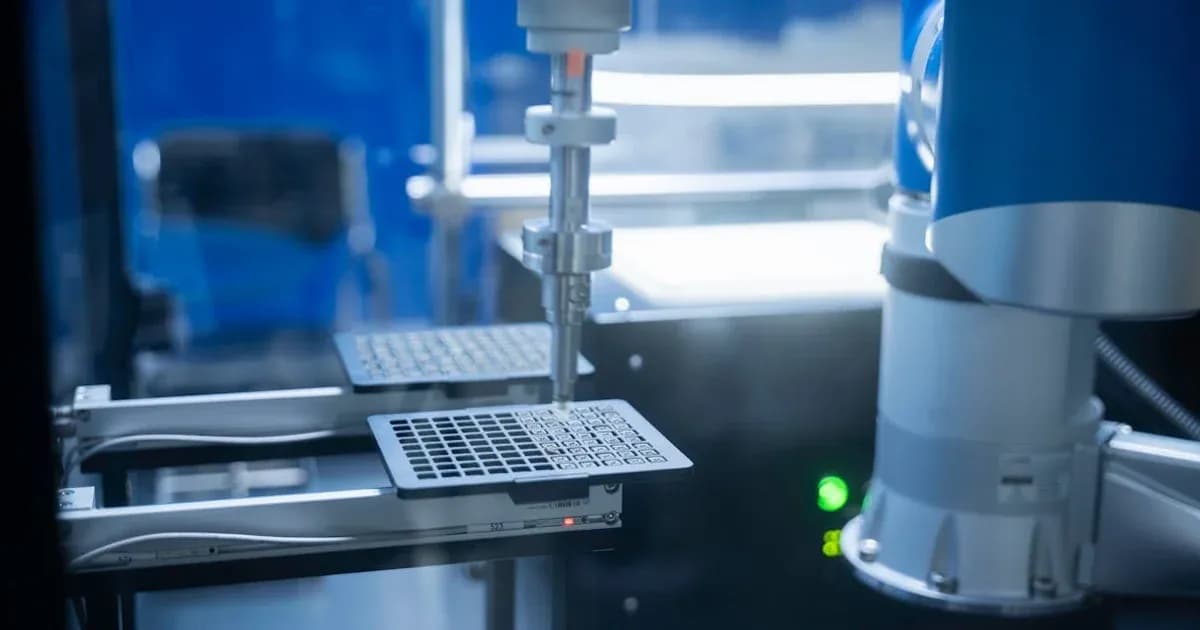
A recent industry analysis by IoT Analytics indicates that 57% of new industrial vision deployments now occur at the edge, a notable increase from just 22% three years prior Source: [IoT Analytics, 2025]. This metric is not merely a statistical anomaly; it signifies a fundamental re-architecture in the distribution of AI compute. Enterprises are moving artificial intelligence processing closer to the data source, directly impacting operational efficiency and decision latency.
The Shift from Centralized Cloud Vision
For years, cloud-centric architectures dominated AI vision. Centralized data centers offered immense compute capacity, simplifying model training and deployment for many applications. This approach served well for tasks where real-time inference was not a critical parameter, or where data transmission costs were secondary to the sheer processing power available. But a fundamental tension exists between the demands of industrial operations and the inherent latencies of cloud infrastructure.
Industrial environments, from manufacturing floors to critical infrastructure sites, generate vast quantities of visual data. Sending all this raw video feed to a remote cloud for analysis incurs significant bandwidth costs, creates transmission delays, and raises data privacy concerns. A factory production line, for instance, cannot tolerate multi-second latencies for defect detection. A safety system monitoring PPE compliance requires immediate alerts. The prevailing view often overestimates the cloud's suitability for all AI tasks, overlooking these operational realities.
Drivers for Edge Vision Adoption
The impetus for shifting AI vision to the extreme edge is multidimensional, driven by both operational necessity and technological maturation. These drivers collectively redefine the architecture for industrial intelligence systems.
Latency and Real-Time Decision Making
Real-time feedback loops are non-negotiable in many industrial settings. Consider an automated quality inspection system on a high-speed assembly line. If a defect is identified, the system must trigger an immediate response—diverting the faulty item, stopping the line, or adjusting parameters. A delay of even a few hundred milliseconds, inherent in cloud round-trips, renders the system ineffective. Edge computing places the inference engine directly at the point of action, reducing latency to single-digit milliseconds. This direct proximity allows for **decision-intelligence** to be exercised at the moment it matters most.
Bandwidth Constraints and Cost Efficiency
Streaming high-resolution video from hundreds or thousands of cameras across a large industrial complex to a central cloud is a logistical and financial burden. A single 4K camera stream can consume significant bandwidth, and aggregating thousands of such streams quickly saturates network infrastructure. Data egress charges from cloud providers also accumulate rapidly. By processing video feeds locally, only metadata or specific alert frames need to be transmitted, drastically cutting bandwidth requirements and operational expenditure. A study by IDC in 2024 projected that edge computing could reduce enterprise data transmission costs by up to 30% for video analytics workloads alone.
Data Privacy and Security
Industrial data, especially visual data from manufacturing processes or employee monitoring, is often sensitive. Regulatory requirements like GDPR or local data sovereignty laws mandate that certain data types remain within specific geographical or organizational boundaries. Processing visual data on-premises, behind corporate firewalls, mitigates risks associated with data in transit and storage in third-party cloud environments. This local processing approach enhances compliance and reduces the attack surface.
Operational Autonomy
Industrial sites often operate in environments with intermittent or unreliable network connectivity. Oil rigs, remote mines, or even older factory buildings may lack consistent high-speed internet. Edge AI systems can function autonomously, performing critical vision tasks even when disconnected from the cloud. This resilience ensures continuous operation, preventing production halts or safety lapses due due to network outages.
Technical Enablers for Extreme Edge Deployment
Achieving cloud-grade AI vision on resource-constrained edge devices requires a confluence of specialized hardware, optimized software, and refined deployment methodologies. These technical advancements are the bedrock of the current shift.
Model Compression and Optimization
Deep learning models trained in the cloud often have millions of parameters, requiring substantial compute and memory. Deploying these models directly to the edge is impractical. Techniques for model compression are essential:
* **Quantization:** Reducing the precision of model weights and activations from floating-point (FP32) to lower-bit integers (e. G., INT8). This can reduce model size by 4x and often accelerate inference by 2-3x on hardware with INT8 support, as detailed in NVIDIA's TensorRT documentation. While accuracy can dip, post-training quantization and quantization-aware training minimize this impact. * **Pruning and Sparsity:** Removing redundant connections or neurons from a neural network without significant loss of accuracy. This creates sparser models that are smaller and faster. * **Knowledge Distillation:** Training a smaller, simpler "student" model to mimic the behavior of a larger, more complex "teacher" model. The student model then inherits the teacher's performance while maintaining a compact footprint.
Frameworks like TensorFlow Lite, PyTorch Mobile, OpenVINO, and ONNX Runtime provide tools and runtimes specifically for deploying optimized models to edge devices. A YOLOv5 object detection model, for example, when quantized to INT8 and optimized with OpenVINO, can achieve real-time inference at high frame rates on an Intel Movidius VPU, a feat unattainable with its original FP32 configuration.
Specialized Edge Hardware
The proliferation of purpose-built edge AI accelerators has been a major catalyst. These hardware components are designed for energy efficiency and high inference throughput at lower power envelopes than general-purpose CPUs or cloud GPUs.
* **Neural Processing Units (NPUs):** Dedicated silicon for accelerating neural network operations. Examples include the Google Coral Edge TPU, offering 4 TOPS at minimal power consumption, and the Intel Movidius Myriad X VPU. * **Embedded GPUs:** NVIDIA's Jetson series (e. G., Jetson Orin Nano, Jetson AGX Xavier) provides a balance of programmability and performance, allowing developers to run complex deep learning models with CUDA acceleration on small form factors. A Jetson Orin Nano can deliver up to 40 TOPS (INT8), making it suitable for multi-stream video analytics at the edge. * **FPGAs and ASICs:** For highly specialized, fixed workloads, Field-Programmable Gate Arrays (FPGAs) or Application-Specific Integrated Circuits (ASICs) offer extreme power efficiency and performance, albeit with higher development complexity and upfront costs.
Edge Orchestration and MLOps
Managing hundreds or thousands of distributed edge AI models requires a resilient MLOps framework tailored for the edge. This involves:
* **Containerization:** Packaging AI models and their dependencies into lightweight containers (Docker, containerd) ensures consistent deployment across diverse hardware. * **Lightweight Orchestration:** Solutions like K3s or MicroK8s provide Kubernetes-native orchestration capabilities for resource-constrained edge clusters, enabling remote deployment, scaling, and management of AI workloads. * **Remote Model Management:** Tools for over-the-air (OTA) updates, A/B testing of models, and monitoring model drift directly on edge devices. This ensures models remain relevant and accurate without requiring physical intervention. * **Data Collection and Re-training Loops:** While inference happens at the edge, a feedback loop for collecting anomalous data or model prediction errors is essential for continuous improvement and re-training in the cloud, closing the MLOps cycle.
Impact on Industrial Operations
The move to extreme edge AI vision delivers tangible improvements across various industrial sectors, translating directly into operational gains and safety enhancements.
Enhanced Manufacturing Quality Control
In manufacturing, AI vision systems can detect microscopic defects, misalignments, or missing components at production line speeds that human inspection cannot match. Systems like Shreeng AI's AI Quality Inspection product deploy models directly on the factory floor, analyzing product images in milliseconds. This precision reduces scrap rates, minimizes costly recalls, and maintains product consistency. For example, a major automotive supplier in Pune implemented edge AI vision to inspect engine components, reducing defect escape rates by 85% and saving an estimated $2.5 million annually in rework and warranty claims, as reported by Frost & Sullivan in 2023.
Improved Worker Safety and Compliance
Safety is paramount in industrial environments. Edge AI vision can monitor for PPE compliance (helmets, vests, gloves), detect unauthorized personnel in hazardous zones, or identify unsafe postures. Shreeng AI's PPE Safety Compliance Detection product exemplifies this application. It provides real-time alerts to supervisors and workers, preventing accidents before they occur. The immediacy of edge inference is critical here; a delayed warning is a failed warning. Similarly, Shreeng AI's Fire & Smoke Detection product can identify early signs of fire or smoke with high accuracy, triggering alarms and initiating safety protocols much faster than traditional sensor networks.
Predictive Maintenance and Anomaly Detection
Monitoring critical machinery with AI vision can identify early indicators of wear, vibration anomalies, or overheating by analyzing visual cues. This enables **predictive maintenance**, allowing for repairs or replacements before catastrophic failures occur. This approach minimizes downtime, extends equipment lifespan, and optimizes maintenance schedules, shifting from reactive to proactive asset management.
Supply Chain and Logistics Optimization
Edge vision systems can track inventory levels in warehouses, monitor cargo integrity during transit, and optimize loading/unloading processes. Real-time insights into material flow and asset location improve supply chain visibility and efficiency, reducing errors and bottlenecks. Shreeng AI's `industry-ai` solutions integrate these vision capabilities to provide a complete picture of operational flows, from raw material to finished goods.
Challenges and Strategic Considerations
While the benefits of extreme edge AI vision are compelling, organizations must navigate several challenges to ensure successful deployment and long-term value.
* **Heterogeneous Edge Environments:** Managing a diverse fleet of edge devices with varying compute capabilities, operating systems, and connectivity options presents a significant orchestration challenge. * **Resource Constraints:** Edge devices operate under strict power, memory, and thermal envelopes. Models must be carefully optimized to function within these limits without sacrificing accuracy. * **Security Posture:** Distributed endpoints increase the attack surface. Implementing strong security measures for device authentication, data encryption, and firmware integrity is crucial. * **Data Labeling and Model Drift:** Training data collected in a cloud environment may not fully represent the conditions at the edge. Model performance can degrade over time due to changes in environmental factors or operational parameters (model drift), necessitating continuous monitoring and re-calibration. * **Operational Integration:** Integrating edge AI insights integrated into existing SCADA, MES, or ERP systems requires careful planning and APIs.
Shreeng AI's Position: Decentralized Operational Intelligence
The future of industrial AI vision is unequivocally distributed. The traditional paradigm of aggregating all data centrally for processing is unsustainable for essential, real-time operational intelligence. Shreeng AI maintains that actionable intelligence must be derived at the source, not merely collected in a central repository. Our perspective is that cloud compute remains essential for model training and global analytics, but inference for immediate action belongs at the edge.
Shreeng AI's approach, embodied in our `ai-video-intelligence` and `industry-ai` solutions, centers on delivering high-precision models optimized for extreme edge deployment. We architect systems that distribute compute to the point of data capture, minimizing data transfer and maximizing decision velocity. For instance, our AI Video Management System (AI-VMS) processes multi-camera feeds locally, leveraging highly efficient models to provide real-time alerts and actionable insights directly to operational teams. This architecture supports immediate action protocols for events such as quality deviations, safety non-compliance, or security breaches.
We provide the tooling and expertise to manage the entire lifecycle of edge AI models, from initial optimization and deployment to continuous monitoring and OTA updates. The goal is to create resilient, autonomous AI systems that operate effectively regardless of cloud connectivity. Shreeng AI believes that this decentralized intelligence is not merely a technical preference, but a strategic imperative for organizations seeking to achieve rare levels of operational efficiency, safety, and responsiveness in their industrial environments. This commitment to edge-first vision systems is what drives genuine digital transformation in manufacturing and critical infrastructure. Request an executive briefing to discuss deployment requirements for your industrial operations.
Sources
- IoT Analytics, The Internet of Things Market 2024-2029 (2025)
- IDC, Worldwide Edge Spending Guide (2024)
- NVIDIA, TensorRT Developer Guide (Accessed 2026)
- Frost & Sullivan, Global Industrial AI Vision Market (2023)
Siddharth Patel
Head of Predictive Systems
Builds forecasting engines and early-warning systems for operations, finance, and supply chain use cases.