On-Device AI: A Foundational Shift
Recent benchmarks confirm a notable shift in AI deployment: models once requiring cloud infrastructure now execute efficiently on standard consumer hardware. Just this week, a leading tech firm demonstrated a 7-billion parameter language model performing real-time inference on a flagship smartphone, achieving latency under 100 milliseconds for complex queries. This is not isolated progress. It marks a clear departure from the cloud-dependency that defined much of the prior decade's AI strategy. The implications extend beyond simple convenience; they touch fundamental aspects of data governance, operational expenditure, and system resilience. We are witnessing the tipping point where on-device AI inference transitions from theoretical possibility to practical, widespread application. This shift is reshaping how engineers approach system design and how enterprises conceptualize their AI strategy. It is a moment of re-evaluation.
The advancements are not confined to large language models (LLMs) alone. Computer vision tasks, such as object detection, facial recognition, and anomaly detection, now run with impressive accuracy and speed on edge devices like surveillance cameras, industrial sensors, and autonomous drones. A 2025 report by Grand View Research projected the edge AI hardware market to reach $11.2 billion by 2028, largely driven by the increasing capability of these devices to host complex AI models. This trajectory indicates a sustained commitment to pushing computational intelligence to the periphery. The industry is responding to clear demands for lower latency and improved data handling.
Consider the energy efficiency implications. Running inference on a local NPU consumes significantly less power than transmitting data to a distant data center and receiving a response. This extends battery life for mobile devices and reduces the carbon footprint for stationary edge deployments. A single inference task, executed locally, might consume millijoules of energy, while a cloud-based equivalent, including data transmission, could consume orders of magnitude more. This energy calculus contributes to the economic viability of edge deployments. It is a compelling argument for decentralization.
This transition is not without its challenges. Model size, computational complexity, and power consumption remain constant engineering considerations. But the recent breakthroughs, particularly in model compression and hardware optimization, have lowered the bar for practical on-device deployment. We are entering an era where embedding significant intelligence directly into devices becomes the default, rather than the exception.
The Engineering Behind Edge Efficiency
This development stems from parallel advancements across several technical domains. First, model architectures have become intrinsically more efficient. Sparse attention mechanisms, grouped query attention, and Mixture-of-Experts (MoE) designs reduce computational load without sacrificing too much performance. These innovations allow models to achieve comparable accuracy with fewer parameters or fewer floating-point operations (FLOPS) per inference. For example, a model designed with MoE layers might only activate a subset of its “expert” networks for any given input, saving computation. This means less work for the device.
Second, quantization techniques have matured significantly. Instead of 32-bit floating point numbers (FP32), models now operate effectively with 8-bit integers (INT8) or even 4-bit integers (INT4), drastically cutting memory footprint and computational requirements for inference. Quantization-aware training ensures that this conversion from higher precision to lower precision does not unduly compromise model accuracy. Techniques like post-training quantization (PTQ) and quantization-aware training (QAT) fine-tune models to perform reliably at reduced precision. A model that originally required 100MB of memory in FP32 might shrink to 25MB in INT8, making it feasible for devices with limited RAM. This compression is not just about size; it accelerates processing by allowing more operations per clock cycle on specialized hardware.
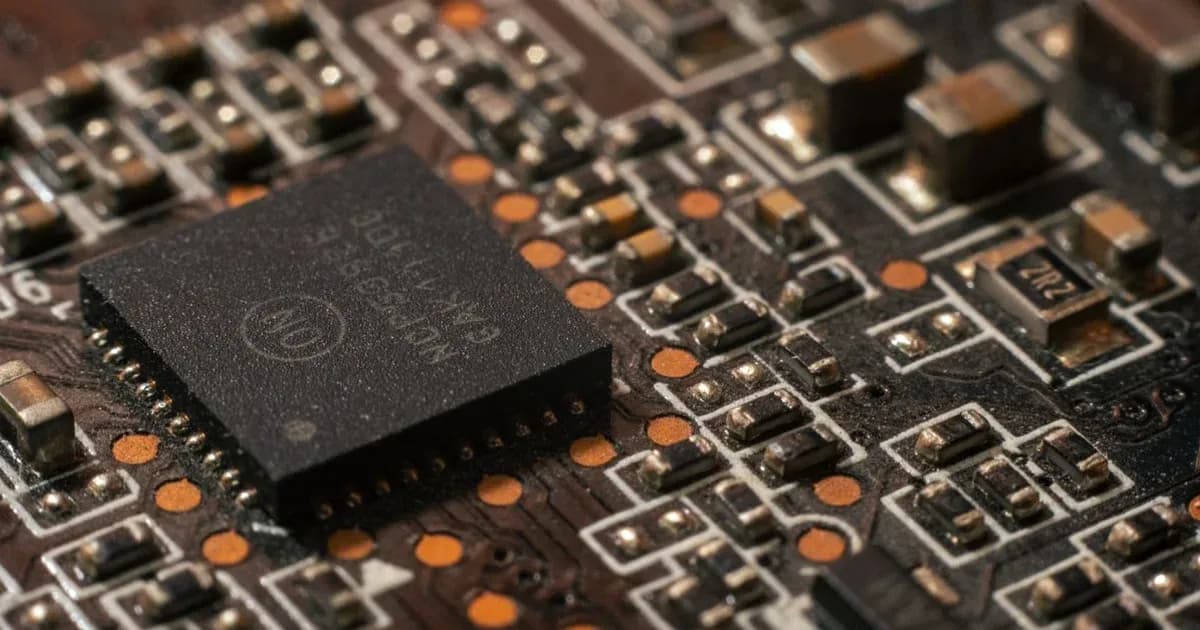
Hardware acceleration also plays a critical role. Modern System-on-Chips (SoCs) include dedicated Neural Processing Units (NPUs) or AI accelerators. These specialized cores are optimized for matrix multiplications and convolutions, operations central to neural networks. An NPU can execute these operations significantly faster and with less power than a general-purpose CPU or even a GPU for inference tasks. A recent report by IDC estimates that NPU shipments in mobile devices will grow by over 50% annually through 2027, reaching hundreds of millions of units. This hardware provides the necessary computational throughput for complex models locally, without overheating the device or draining its battery quickly.
Further, compiler technologies have evolved to optimize model graphs for specific edge hardware. Frameworks like ONNX Runtime, TFLite, and Core ML automatically apply graph transformations, fuse operations, and manage memory allocation to maximize inference speed on diverse device types. These tools bridge the gap between model training in the cloud and efficient execution at the periphery of the network. They abstract away much of the underlying hardware complexity, presenting a unified interface for developers. The convergence of these factors creates a viable pathway for on-device inference at scale. This allows for applications previously considered impossible due to network latency or data transfer costs.
Model pruning and distillation also contribute to efficiency. Pruning removes redundant connections or neurons from a trained model, making it smaller and faster without significant accuracy loss. Distillation trains a smaller “student” model to mimic the behavior of a larger “teacher” model, effectively transferring knowledge and reducing the student’s size and computational demands. For instance, a large language model trained on terabytes of text can distill its core capabilities into a smaller, specialized version suitable for a mobile phone, as detailed in recent research by Google AI. These techniques are not merely optimizations; they are fundamental engineering practices that enable intelligence at the edge.
Implications for Organizational Strategy
The shift to on-device AI inference alters organizational strategies for data processing, security, and operational costs. For enterprises, moving computation to the edge reduces reliance on centralized cloud resources. This translates to direct cost savings on cloud compute and data egress charges. A 2024 study by Deloitte projected that organizations could reduce cloud infrastructure costs by 15-20% through strategic edge deployments. This economic incentive alone is enough to spur significant architectural changes in sectors ranging from retail analytics to industrial IoT. Organizations can reallocate cloud budgets towards more specialized, high-value cloud services, using edge AI for routine, high-volume tasks.
Data privacy receives a significant boost. Sensitive information, whether personal identifiable information (PII) or proprietary industrial data, remains on the device. It never traverses a network to a remote server. This inherent data localization simplifies compliance with stringent regulations like GDPR and India’s DPDP Act. For use cases involving personal data, such as biometric authentication or localized content filtering, this reduces legal and reputational risk. Companies handling sensitive customer data can now offer AI-powered services with greater assurance regarding data residency and minimal exposure. This is a critical factor for adoption in highly regulated industries like healthcare and finance.
Operational resilience also increases. On-device models function without an internet connection. This ensures continuous operation in environments with intermittent or no network access, such as remote industrial sites, critical infrastructure, or mobile field operations. Consider manufacturing facilities where network drops cannot halt quality inspections or predictive maintenance routines. Systems like Shreeng AI’s predictive-maintenance platform can deploy models directly to edge devices, processing sensor data locally to identify anomalies and predict equipment failures, even in isolated production lines. This maintains uptime and operational continuity, preventing costly downtime and production losses. This capability is paramount for sectors where network reliability cannot be guaranteed.
For AI cybersecurity, on-device intelligence can detect threats at the endpoint faster than cloud-dependent solutions. Malware analysis, anomalous behavior detection, and intrusion prevention can occur in milliseconds, before data exfiltration or system compromise. This immediate response capability strengthens overall security posture by reducing the window of vulnerability. Endpoint Detection and Response (EDR) agents, now augmented with on-device AI, can proactively identify zero-day exploits or complex phishing attempts based on behavioral patterns, not just signature matching. This shifts the defense paradigm closer to the threat origin.
And, on-device AI enables personalized experiences without compromising privacy. Recommendation engines, language assistants, and user interface optimizations can learn from individual user behavior directly on their device. This creates a feedback loop where AI adapts to the user, not the other way around. This level of personalization, coupled with data sovereignty, offers a compelling value proposition for consumer-facing applications and internal enterprise tools alike. The user experience becomes more fluid and responsive, as latency is minimized.
Shreeng AI's Position: Distributed Intelligence as Standard
Shreeng AI recognizes on-device AI inference not as a niche capability, but as a foundational shift for modern enterprise and government deployments. We consider it essential for building truly resilient, privacy-preserving, and cost-effective AI systems. Our strategy centers on engineering AI solutions that excel across the compute continuum, from hyperscale cloud to the smallest edge device. This mandates a deep understanding of model optimization techniques, hardware acceleration interfaces, and secure deployment practices. We believe that ignoring the edge is to ignore a critical dimension of future AI functionality and economic advantage.
We commit to designing AI agents that operate effectively at the edge. Our approach integrates techniques such as model distillation, federated learning, and efficient quantization to ensure that models trained on vast cloud datasets retain high accuracy while becoming compact enough for on-device execution. For instance, our automation-ai solutions increasingly incorporate local inference capabilities. This allows processes like document classification or sensor data pre-processing to occur at the source, reducing latency and bandwidth consumption before critical information is routed to central systems for decision-intelligence. This distributed intelligence architecture ensures that time-sensitive decisions can be made instantly, while broader strategic insights benefit from aggregated, anonymized data in the cloud.
The future of AI is distributed. Organizations that prioritize on-device inference will secure significant competitive advantages in operational efficiency, data sovereignty, and user experience. Shreeng AI is building the infrastructure and intelligence layers to make this future practical today. Our ai-chatbot solutions, for example, are engineered to support hybrid inference — offloading complex queries to the cloud while handling routine interactions locally. This balances computational needs with responsiveness and privacy requirements. For a customer service bot, common FAQs can be answered instantly on a user’s device, maintaining continuity even if network conditions degrade. More complex support issues might then integrated transition to a cloud-backed model. This architectural flexibility is paramount for real-world adoption and user satisfaction.
We also foresee a significant impact on compliance and regulatory frameworks. As AI models become embedded within devices, the responsibility for their behavior, data handling, and potential biases shifts. Organizations will need clear frameworks for model versioning, auditing, and secure over-the-air updates for edge deployments. Shreeng AI assists clients in establishing these governance structures, ensuring that distributed AI adheres to enterprise standards and regulatory mandates. This commitment extends to ensuring explainability and transparency even for models running on constrained hardware. We design for accountability from the outset.
The economic argument for edge AI is clear. Reduced cloud spend, decreased data transfer costs, and lower power consumption translate directly to improved margins. But the strategic argument is even more compelling: achieving true data privacy, enhancing operational continuity, and enabling real-time responsiveness that cloud-only solutions cannot match. Shreeng AI positions itself as the partner for organizations ready to embrace this distributed intelligence paradigm, providing the engineering expertise and platform capabilities required to deploy AI where it creates the most value: at the edge.
Sources
Vikram Nair
VP of Engineering
Oversees platform engineering, infrastructure reliability, and production AI systems across all deployments.