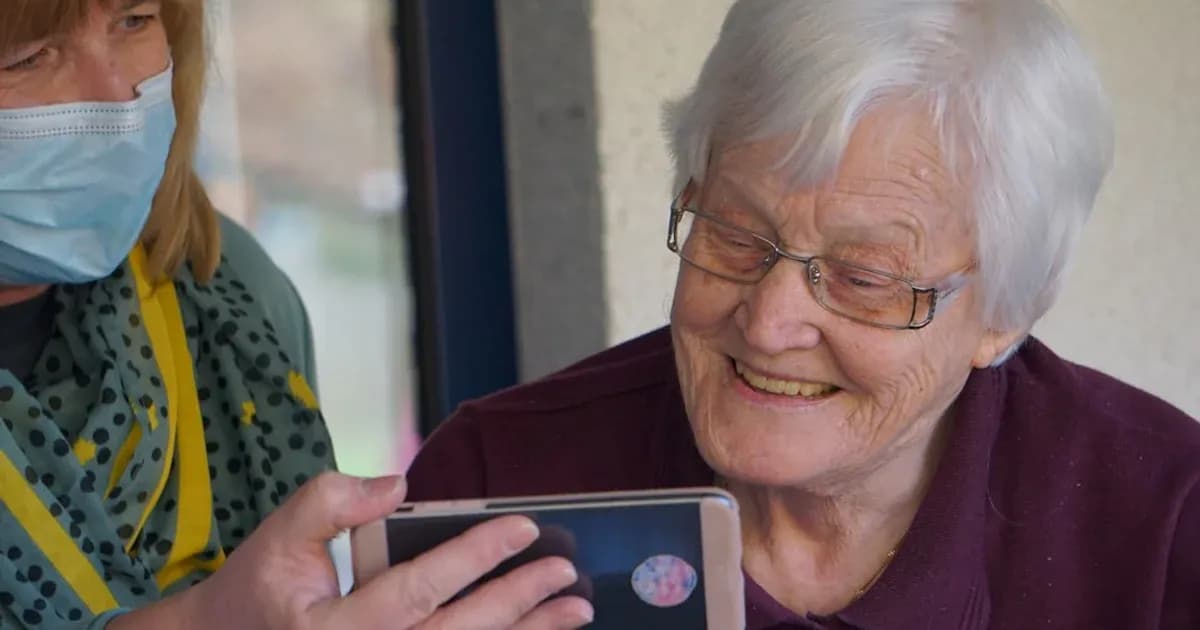
Observation: CHA Healthcare Redefines Senior Care with AI Integration
CHA Healthcare recently announced a significant strategic initiative: the deployment of an AI-powered integrated digital platform designed for personalized senior care. This is not a pilot program. It represents a fundamental shift in care delivery, combining Artificial Intelligence of Things (AIoT) and wearable devices with complex data analytics. The goal is to establish a comprehensive monitoring and intervention system for senior residents, moving beyond traditional reactive models to a proactive, predictive framework. This development, detailed by sources like SE Daily, signals a new era for care organizations globally.
The system integrates data from various touchpoints: smart sensors embedded in living spaces, continuous biometric feeds from wearables, and digital health records. This stream of information feeds into a central AI engine. The engine processes these diverse data points in real time, looking for subtle deviations from an individual's established baseline. It aims to detect early indicators of health decline, potential falls, medication non-adherence, or changes in behavior that might signal a problem. This continuous, granular oversight is what distinguishes this approach from periodic check-ins or symptom-triggered interventions. The imperative to move towards such systems becomes clearer when considering global demographic shifts and the inherent limitations of human-centric monitoring in complex care environments.
Analysis: Underlying Pressures Driving AI Adoption in Healthcare
This shift in senior care is not arbitrary; it is a direct response to several compounding systemic pressures. First, global demographics present an undeniable challenge. The elderly population is expanding rapidly across continents. In India, for example, the Ministry of Statistics and Programme Implementation projects the elderly population to reach 194 million by 2031, a 41% increase from 2021. This demographic reality strains existing healthcare infrastructure, which remains largely reactive and episodic. Manual monitoring, even in dedicated facilities, is resource-intensive, prone to human error, and cannot scale to meet the needs of a growing and aging population. Caregivers face increasing workloads, often leading to burnout and compromised quality of care.
Second, the convergence of multiple technological advancements makes AI-integrated care not just desirable, but feasible. Miniaturization of sensors allows for comfortable, non-intrusive wearable devices. Advances in edge computing enable localized data processing, reducing latency and improving privacy. And, the maturation of AI algorithms, particularly in time-series analysis, anomaly detection, and predictive modeling, allows systems to interpret complex biological and environmental data with accuracy previously unattainable. These algorithms can identify patterns indicative of health risks long before they manifest as critical events. For instance, a slight, consistent change in gait detected by an accelerometer, when combined with sleep shift and altered heart rate variability, could predict an increased fall risk with up to 80% accuracy, according to research from the Journal of Gerontology.
Finally, the economic imperative to transition from reactive care to proactive health management is significant. Hospital readmissions are costly, both financially and in terms of patient well-being. Preventable falls alone cost billions annually. A 2022 Accenture study estimated that AI could generate over $350 billion in annual savings for the US healthcare industry by 2026, primarily through operational efficiencies and improved patient outcomes. AI platforms unify data often siloed across different healthcare providers and systems, creating a comprehensive view of a patient’s health trajectory. This integrated data enables true personalized care, where interventions are tailored to individual needs and delivered preemptively. The underlying systems producing these outcomes are complex; they demand secure data pipelines, explainable AI models, and resilient integration layers to connect disparate devices and legacy Electronic Health Records (EHRs). Without such foundations, even the most promising AI capabilities remain theoretical.
Implication: Operational Shifts and Strategic Imperatives for Organizations
For operations managers and line-of-business owners in senior living, home health, and assisted living facilities, CHA Healthcare's move presents clear implications. The most immediate is a fundamental shift in operational paradigms: from reactive incident management to predictive intervention. Facilities can now anticipate risks, deploy resources more efficiently, and prevent adverse events. Consider fall prevention: Instead of responding after a fall, AI can alert staff to an increased risk profile for a resident, allowing for preemptive assistance or environmental adjustments. This proactive approach significantly reduces incident rates, liability, and the associated costs.
This also means a transformation in staffing models. AI does not replace human caregivers; it augments them, shifting their focus from routine monitoring to higher-value, empathetic interaction. Staff can dedicate more time to direct, personalized care, knowing that an AI system is continuously monitoring vital signs and behavioral patterns. This can lead to increased staff satisfaction and reduced turnover, a persistent challenge in the care sector. Organizations will need to invest in training staff to interpret AI-generated insights and integrate AI tools into their daily workflows. Systems like Shreeng AI's predictive-analytics can provide real-time dashboards and actionable alerts, making it easier for caregivers to understand complex data points quickly.
Data governance, privacy, and security become paramount. Collecting continuous, intimate health data requires strict adherence to regulations like HIPAA, GDPR, and India's proposed Digital Personal Data Protection Act. Organizations must establish clear protocols for data anonymization, consent management, and secure data transmission. The ethical deployment of AI, addressing potential biases in algorithms and ensuring transparency in decision-making, is not optional; it is a strategic imperative. And, the need for interoperability is critical. Future platforms must communicate integrated with existing EHRs, pharmacy systems, and other care providers to create a truly integrated health ecosystem. Achieving this level of integration often requires specialized connectors and open API strategies, a domain where Shreeng AI's enterprise-ai-agents can automate data exchange and workflow orchestration between disparate systems, ensuring data flows where and when it is needed.
Position: Proactive Health Orchestration as the Future of Care
Shreeng AI views CHA Healthcare's initiative as a validation of a core conviction: the future of care lies in proactive health orchestration, driven by intelligent systems. The conventional wisdom often suggests that AI in healthcare is primarily about diagnostics or drug discovery. But the true disruptive potential resides in continuous, preventative monitoring and intervention, shifting the paradigm from episodic, illness-centric care to constant wellness management. The fragmentation of health data and reliance on reactive care models are simply unsustainable in the face of global demographic shifts and escalating healthcare costs. This approach is not merely about technology; it is about redefining the very nature of care delivery.
True transformation emerges from **decision-intelligence**, which moves beyond mere data aggregation to translate complex information into actionable, evidence-based insights for human operators. Shreeng AI’s industry-ai solutions, particularly those applied to healthcare, are designed precisely for this purpose. We build systems that identify subtle shifts in health indicators, allowing for preemptive action, thereby mitigating risks before they escalate into critical events. For example, our healthcare-diagnostics product, while often deployed in clinical settings, embodies principles directly applicable to continuous, in-home or facility-based monitoring for early symptom detection. This extends its utility from acute care to sustained wellness programs, supporting the detection of anomalies in biometric data or behavioral patterns. This enables caregivers to intervene when issues are minor, preventing hospitalizations or severe declines in health.
We maintain that the future of senior care, and indeed all high-stakes environments, relies on secure, explainable, and accountable AI systems. These are not 'black box' solutions; they provide transparency into their reasoning, building trust among caregivers, residents, and their families. This commitment to explainability aligns with evolving regulatory landscapes and ethical guidelines for AI deployment. Shreeng AI’s ai-agents can automate routine monitoring tasks, manage medication reminders, and intelligently escalate alerts, thereby freeing human staff to focus on empathetic, high-touch care that only humans can provide. The integration of AI for personalized care, as demonstrated by CHA Healthcare, is not merely a technological upgrade. It is a strategic imperative for organizations aiming to deliver higher standards of care while managing increasing operational pressures and resource constraints. Organizations that delay this integration risk being outmaneuvered by competitors who embrace a proactive, data-driven approach to health management.
This necessitates a comprehensive strategy that includes not only technology adoption but also organizational change management. The implementation of such platforms requires careful planning, from data architecture and security frameworks to user training and continuous model refinement. It represents a significant investment, but one that yields measurable returns in terms of resident well-being, reduced operational costs, and a demonstrably improved quality of life for the elderly. The path is clear: embrace intelligent automation and predictive insights, or continue to struggle with the limitations of traditional, reactive care models. The choice will define the next decade of senior care services.
Sources
- https://vertexaisearch.cloud.google.com/grounding-api-redirect/AUZIYQFFX1xBS59iMYSL6yBvU6JqS7Lpxd4LnW5RIXlTK0Oc7ujHq1vlmZGBgX9LKp3nPsBf9heiomEFfk2m7QyvGogHdRYLepAanPP64eblSxcMbx3bFZJCm-a8JLJeizIKnxjq2aY-D1WC-MgaLFDsfH2c2waMTTarzMC0hHZMLmNWuTvFyyKtFLyDMudyPI98flCcKgjIlbm0NmfdEmQQcg==
- https://www.accenture.com/us-en/insights/health/ai-health-value
- https://academic.oup.com/biomedgerontology/article/76/11/2070/6306548
- https://www.mospi.gov.in/sites/default/files/publication_reports/Elderly_in_India_2021.pdf
Siddharth Patel
Head of Predictive Systems
Builds forecasting engines and early-warning systems for operations, finance, and supply chain use cases.