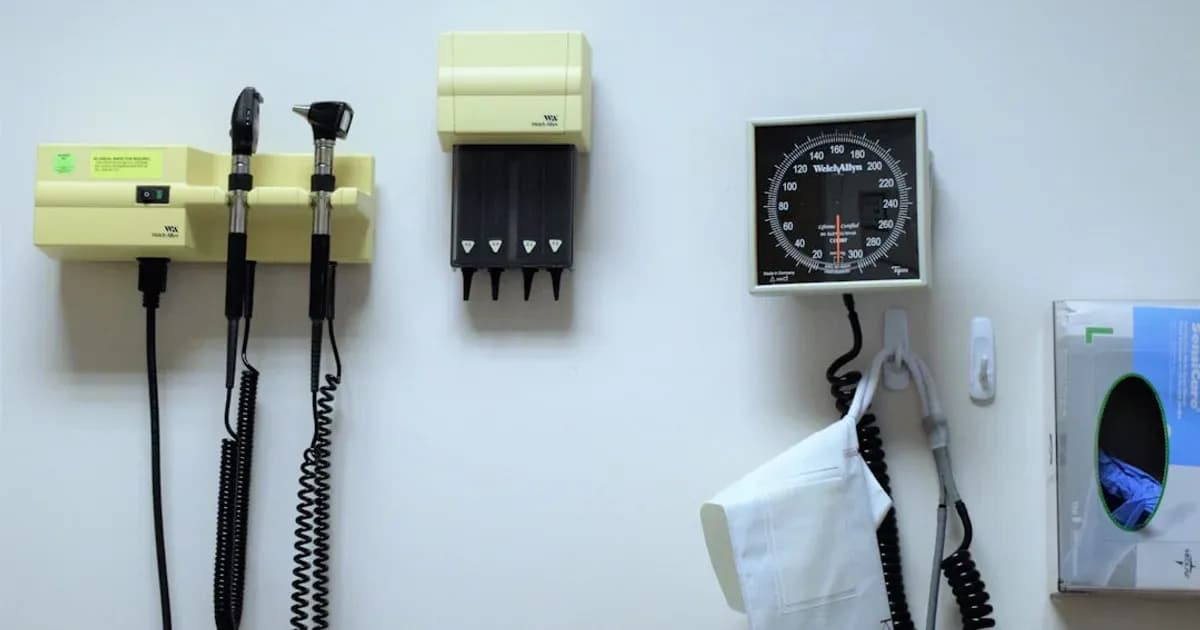
India's healthcare system serves 1.4 billion people with approximately 1.3 million allopathic doctors. The arithmetic is stark: roughly one physician for every 1,076 citizens, with distribution heavily skewed toward urban centres. Metropolitan hospitals operate with specialist density comparable to OECD nations. Rural and semi-urban facilities — where 65% of the population resides — operate with generalist physicians managing conditions that require specialist interpretation.
This is not a training pipeline problem alone. India produces over 100,000 medical graduates annually. The gap is structural: specialists concentrate where infrastructure, compensation, and professional networks exist. A radiologist in Mumbai has access to advanced imaging equipment, peer consultation, and continuing education. A district hospital in Madhya Pradesh may have a CT scanner but no radiologist to interpret the scans. The equipment exists. The expertise does not.
AI-assisted diagnostics addresses this specific bottleneck. Not by replacing physicians — that framing misunderstands both the technology and the clinical context — but by extending specialist-grade pattern recognition to locations where specialists are absent. The model reads the scan. The physician makes the clinical decision. The patient receives timely diagnosis instead of waiting weeks for a referral to an overburdened tertiary centre.
Radiology AI: Where the Evidence Is Strongest
Radiology represents the most mature application of AI diagnostics, and for good reason. Medical imaging is high-volume, pattern-dependent, and produces structured digital data. A chest X-ray is a standardised input. Tuberculosis, pneumonia, cardiomegaly, and pleural effusion produce identifiable radiographic patterns. AI models trained on millions of annotated images can flag these patterns with sensitivity and specificity approaching — and in some narrow tasks exceeding — board-certified radiologists.
India's TB burden makes this particularly consequential. The country accounts for approximately 27% of global TB cases. Early detection through chest X-ray screening, combined with confirmatory testing, is central to the National TB Elimination Programme's 2025 targets. AI-assisted X-ray interpretation enables high-throughput screening at primary health centres, where dedicated radiologists are unavailable. The model triages: flagging abnormal films for physician review while passing clearly normal films, reducing the interpretive burden on overstretched medical officers.
Several Indian organisations have deployed radiology AI in field conditions. Qure.ai's chest X-ray solution operates across multiple state TB programmes. The Indian Council of Medical Research (ICMR) has evaluated AI diagnostic tools for both TB and COVID-19 screening. These are not laboratory demonstrations. They are operational deployments processing thousands of scans in resource-constrained settings, generating evidence on real-world sensitivity, specificity, and workflow integration.
Beyond chest X-rays, retinal imaging for diabetic retinopathy screening shows strong results. India has an estimated 77 million diabetic patients. Annual retinal screening is recommended but practically impossible given the shortage of ophthalmologists outside major cities. AI-enabled fundus cameras — compact devices that capture retinal images and run inference locally — can screen patients at community health centres, referring only those with detected pathology to specialists. The Industry AI Platform architecture supports these distributed inference models, processing imaging data at the point of care rather than requiring cloud connectivity.
Pathology Automation and Point-of-Care Testing
Pathology follows a similar trajectory with different technical constraints. Histopathology — the microscopic examination of tissue samples — requires trained pathologists whose distribution mirrors the broader specialist shortage. Digital pathology, which converts glass slides to high-resolution digital images, creates the substrate for AI analysis. Whole-slide imaging combined with deep learning models can identify malignant cells, grade tumours, and quantify biomarkers.
The challenge in India is infrastructure. Digital pathology requires high-resolution scanners, substantial storage capacity, and network bandwidth for image transfer. These requirements limit deployment to tertiary centres and well-funded diagnostic chains. However, the model is shifting. Companies like SigTuple and PathPresenter are developing solutions optimised for Indian conditions: lower-resolution imaging with AI models trained to compensate, edge processing that reduces bandwidth requirements, and workflow designs that integrate with existing laboratory information systems.
Point-of-care diagnostics represents another frontier. Portable devices that combine sample preparation, imaging, and AI interpretation can bring diagnostic capability to the village level. Malaria detection from blood smears, anaemia screening from conjunctival imaging, and urinalysis from smartphone-attached devices are all under active development and early deployment. These applications bypass the traditional laboratory infrastructure entirely, which is precisely why they matter for rural healthcare access.
Regulatory Framework and ICMR Guidelines
India's regulatory framework for AI diagnostics is evolving. The Central Drugs Standard Control Organisation (CDSCO) classifies AI-based diagnostic software as medical devices, requiring regulatory approval before clinical use. The ICMR has published ethical guidelines for AI in biomedical research and health, establishing principles for validation, transparency, and accountability.
The regulatory approach reflects a pragmatic balance. India cannot afford to adopt AI diagnostics without validation — patient safety requires evidence of clinical accuracy. But India also cannot afford the regulatory timelines typical of markets with abundant specialist capacity. The stakes of delayed adoption are measured in missed diagnoses and preventable mortality.
Key regulatory requirements include clinical validation on Indian patient populations (model performance varies across demographics and disease prevalence), transparency regarding model limitations and failure modes, and clear delineation of clinical responsibility — the AI provides decision support, the licensed physician bears clinical accountability. These principles align with global frameworks but adapt to Indian conditions where the alternative to AI-assisted diagnosis is often no specialist diagnosis at all.
Telemedicine Integration and the Hybrid Model
AI diagnostics achieves maximum impact when integrated with telemedicine infrastructure. The model is straightforward: AI performs initial screening and pattern detection at the point of care. Abnormal findings are flagged and transmitted — along with the relevant imaging and clinical data — to a remote specialist for consultation. The specialist reviews the AI-flagged findings, confirms or overrides the assessment, and provides clinical guidance to the local physician.
This hybrid model — AI screening plus remote specialist oversight — addresses both the access gap and the trust gap. Physicians at district hospitals gain access to specialist-grade screening without leaving their facility. Patients receive timely assessment without travelling to distant tertiary centres. Specialists at urban hospitals extend their reach without physical presence. The Predictive Analytics Platform supports the data infrastructure required for this integration, enabling real-time data flow between distributed care sites and central specialist hubs.
India's telemedicine infrastructure expanded dramatically during the COVID-19 pandemic. The Ayushman Bharat Digital Mission (ABDM) is building the digital health identity and interoperability layers that AI diagnostic integration requires. eSanjeevani, the government's telemedicine platform, processed over 100 million consultations. This infrastructure — imperfect but operational — provides the connectivity backbone for AI-augmented remote diagnostics.
Deployment Realities and the Path Forward
Deploying AI diagnostics in Indian healthcare settings requires confronting practical constraints that laboratory benchmarks do not capture. Power reliability, internet connectivity, ambient temperature ranges, dust exposure, operator training levels, and maintenance access all affect system performance. A model that achieves 97% sensitivity on curated test data may perform differently when the X-ray machine is poorly calibrated, the image is slightly rotated, or the patient has a body habitus underrepresented in the training data.
These are engineering challenges, not fundamental barriers. Ruggedised hardware, edge computing that operates without continuous connectivity, simplified user interfaces designed for operators with minimal technical training, and quality assurance protocols adapted to resource-constrained environments are all solvable problems. Several Indian deployments have demonstrated this: AI diagnostic systems operating in primary health centres, processing thousands of studies, with performance metrics that hold up under field conditions.
The path forward combines continued clinical validation, regulatory clarity, infrastructure investment, and — critically — integration with clinical workflows rather than deployment as standalone tools. AI diagnostics that require physicians to change their workflow significantly will face adoption resistance regardless of accuracy. Systems that integrate into existing clinical processes, presenting findings where physicians already look and in formats they already understand, achieve adoption and sustained use.
India's healthcare access gap is not a problem that will be solved by training more specialists alone. The timeline is too long and the structural incentives too strong. AI-assisted diagnostics offers a complementary path: extending specialist capability to where patients are, through technology that is increasingly validated, increasingly affordable, and increasingly integrated with the digital health infrastructure India is building.
Sources
Kavita Iyer
Lead Data Scientist
Develops predictive models and statistical frameworks for demand forecasting, risk scoring, and anomaly detection.