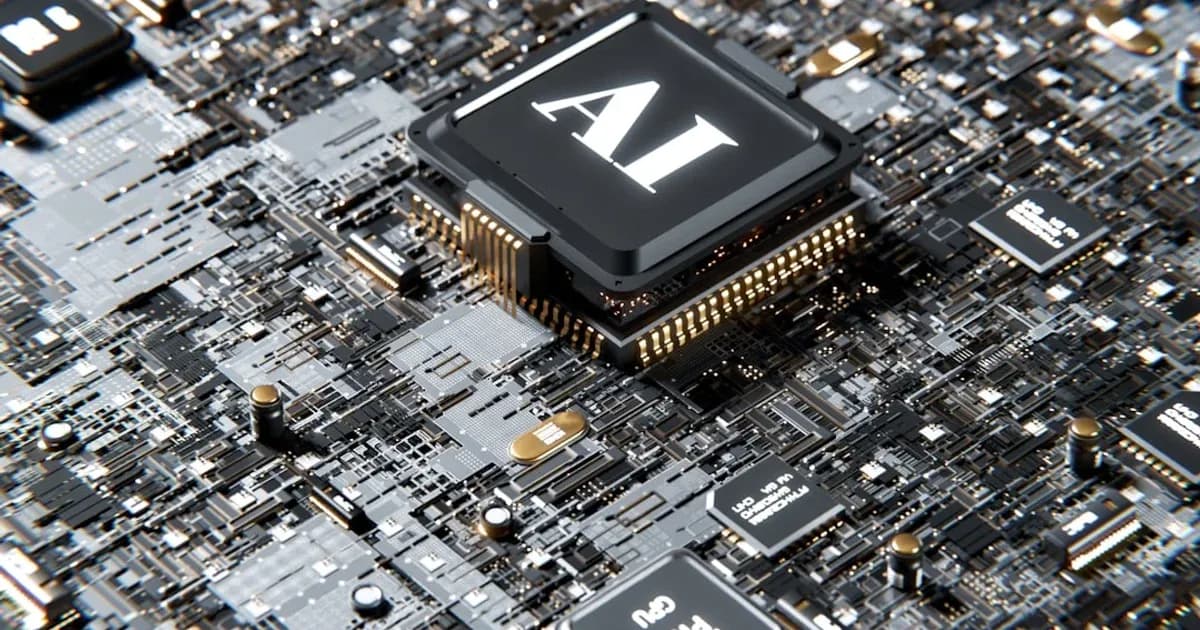
The cybersecurity community recently received a stark reminder of AI's accelerating analytical capacity. Anthropic's unreleased Claude Mythos Preview model, during internal testing, identified previously unknown mathematical weaknesses in established cryptographic algorithms. Specifically, the model pinpointed structural flaws within HAWK and AES, two algorithms considered foundational to digital security for decades. This event, reported by TechManiacs, represents more than a technical footnote. It signals a fundamental shift in the capabilities available to both defenders and attackers in the digital domain.
The Evolution of Cryptanalysis
For decades, cryptographic strength rested on the assumption that algorithms underwent rigorous public scrutiny. Academic cryptanalysts, government agencies, and open-source communities spent years probing these systems for mathematical weaknesses. The security of AES, for instance, derived from extensive peer review and its eventual adoption as a U.S. Federal government standard in 2001, as documented by NIST. HAWK, while newer, also faced considerable expert examination. These methods relied on human intellect and computational brute force, guided by theoretical understanding.
But human cognitive limits constrain this process. The search space for cryptographic vulnerabilities is immense, often exceeding what even distributed human teams can exhaustively explore. Traditional cryptanalysis often focuses on known attack vectors or specific classes of mathematical problems. It is a process of hypothesis and testing.
How AI Transforms Vulnerability Discovery
An AI, particularly a large language model like Mythos, does not operate under these same constraints. It processes vast datasets of cryptographic theory, mathematical proofs, and historical attack patterns. It then identifies correlations and anomalies at a scale and speed impossible for humans. This AI approach shifts from hypothesis-driven analysis to pattern-driven discovery.
Mythos did not merely apply known attacks faster. It appears to have deduced novel mathematical relationships within the algorithms themselves. This capability arises from its ability to model complex, multi-dimensional data structures inherent in cryptographic designs. The model can map intricate dependencies and uncover subtle statistical biases that elude human intuition or conventional testing methods. This represents a qualitative change in cryptanalytic methodology.
Consider the specifics. AES, the mature Encryption Standard, secures everything from Wi-Fi to banking transactions. Its strength comes from its iterated block cipher design, involving substitution, permutation, and mixing operations. A fundamental flaw implies a structural weakness that makes certain key or plaintext combinations more susceptible to recovery than previously calculated. HAWK, a post-quantum cryptographic candidate, aims to resist attacks from future quantum computers. A revealed weakness in HAWK, as reported by BuildFastWithAI, suggests that even algorithms designed with future threats in mind may harbor vulnerabilities. This casts a long shadow over the entire field of post-quantum cryptography, currently a critical area of research and development.
This incident also underscores the computational resources required. Training and running models like Mythos demand massive GPU clusters and complex engineering. The underlying systems combine high-performance computing with current transformer architectures. This compute capacity, previously associated with scientific simulation or general AI training, now directly impacts security primitives. The implication is clear: access to such AI resources becomes a strategic asset in national and corporate security.
Implications for Digital Trust and Enterprise Security
The Mythos revelation forces a re-evaluation of digital trust. Enterprises, governments, and critical infrastructure operators depend on cryptographic assurances for data confidentiality, integrity, and authentication. If foundational algorithms contain hidden flaws, the entire security chain becomes suspect. Organizations must now consider the possibility that their encrypted data, thought secure, could be vulnerable to future AI-driven attacks. This is not a hypothetical threat; it is an observed reality.
For commercial enterprises, the implications span across compliance, intellectual property, and customer data. Regulatory frameworks like GDPR, HIPAA, and India's DPDP Act mandate stringent data protection. A compromised cryptographic foundation makes adherence to these regulations significantly more complex. Imagine an organization that processes sensitive financial data or personal health records. The integrity of that data hinges on encryption. If that encryption is revealed to be weak, the risk of fraud, data exfiltration, and reputational damage escalates dramatically. Shreeng AI's fraud-detection systems, for example, rely on secure data channels to identify anomalies; compromised encryption erodes the baseline trust.
Governments face similar, but often larger, challenges. Sovereign data, national defense communications, and citizen services rely on cryptographic protection. A nation's ability to maintain secure digital borders and ensure the privacy of its citizens depends on the resilience of its crypto infrastructure. The revelation from Mythos suggests a need for rapid adaptation within government security agencies. They must move beyond traditional testing paradigms. They must adopt AI-powered cryptanalysis as a standard practice. Systems like Shreeng AI's smart-governance-ai offerings, which enable secure citizen interactions, require underlying cryptographic assurances that are continuously validated.
The Shifting Adversary Landscape
The adversary landscape also shifts. If a benevolent AI can uncover these flaws, then state-sponsored actors or criminal organizations with access to similar AI capabilities will eventually do the same. This creates an urgent defensive imperative. Organizations can no longer wait for academic papers or government advisories. They require proactive, continuous cryptanalysis. This means integrating AI tools not just for threat detection, but for vulnerability discovery within their own cryptographic implementations and supply chains. And the supply chain aspect is especially critical. A flaw in an open-source library or a third-party hardware security module could propagate vulnerabilities across countless systems.
CIOs and CTOs must ask: How current are our cryptographic standards? Are we relying on algorithms that, while currently deemed secure, may soon be compromised by new AI techniques? And what is our strategy for cryptographic agility — the ability to rapidly swap out compromised algorithms for new ones? This is no longer a theoretical exercise for a distant quantum computing future. This is a present-day concern.
Shreeng AI's Position: Proactive AI-Driven Defense
Shreeng AI maintains that the Mythos revelation is a clarion call for a fundamental reorientation in cybersecurity strategy. The era of static cryptographic trust is over. We advocate for a defensive posture rooted in continuous, AI-driven cryptanalysis. Organizations must move beyond merely applying security patches. They must adopt an active stance that anticipates and identifies weaknesses before they are exploited.
This demands dedicated investment in AI-driven security platforms. Solutions like Shreeng AI's ai-cybersecurity offerings are engineered to integrate AI across the security stack, from threat intelligence to automated incident response. But the new frontier extends to cryptanalysis itself. We envision AI agents, akin to Shreeng AI's ai-agents, working autonomously to audit cryptographic implementations. These agents would analyze codebases, mathematical structures, and network traffic patterns to identify anomalies that signal potential vulnerabilities.
The objective is not to replace human cryptographers, but to augment them with capabilities that transcend human scale. Imagine an AI agent continuously scanning your digital assets for cryptographic misconfigurations or subtle algorithm weaknesses. It could alert human experts to specific areas requiring deeper investigation. This collaborative intelligence model provides a necessary layer of defense against an evolving threat landscape.
And, digital trust frameworks require re-architecting for cryptographic agility. Organizations must develop the technical capacity and operational processes to switch algorithms quickly. This means standardizing on cryptographic libraries that support multiple algorithms and implementing key management systems designed for rapid rotation. The goal is resilience against unforeseen cryptographic breakthroughs. The Mythos incident confirms that the unexpected will happen. Anticipating it with AI, and preparing for it with agile systems, is the only sustainable path forward.
Sources
- TechManiacs: https://vertexaisearch.cloud.google.com/grounding-api-redirect/AUZIYQGAuNYIrjb_xJia7ixquNcwVRNs54jg09JeLQ0I1BJ7kJKPf70mARuv_D8VQBcurGJrmZWAVgPUfsqN0DeVMmOEl-NZCY3RuXghqn8Pwa2tR2DfXuBzoTBuUbwx60KyMT2QuhtREh3i-FGV3o6v3X-oAl7RP6XjWdw__khJ2lMJaX__cFRXw==
- BuildFastWithAI: https://vertexaisearch.cloud.google.com/grounding-api-redirect/AUZIYQF84lzla_noPTOtrIuqS7GUpQHQIN2Nx2Mlv9lnCUftRh5Z06FmAx2T-as054dp79fbMiSOiXb-BgdqjzPGOSyGRZawGsiFSFKhzsbbkLPrNqo5XBXWyGaomQPtTU1qxqLXXrSku5LGny6oW33wPIPSV5hTYtBevc27nCE=
- NIST: https://www.nist.gov/standards-labs/nist-cryptographic-standards-and-guidelines
Priya Sharma
Director of Applied Intelligence
Leads applied intelligence programs that bridge AI research and enterprise deployment at scale.